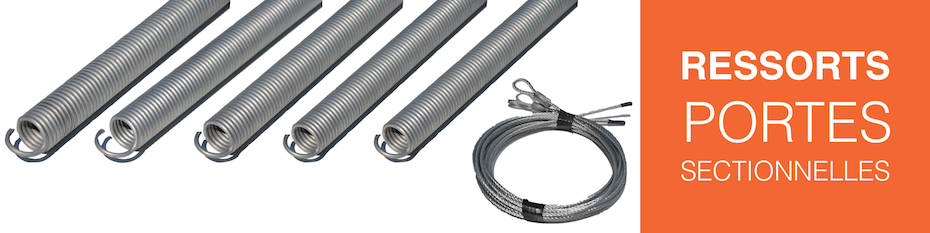
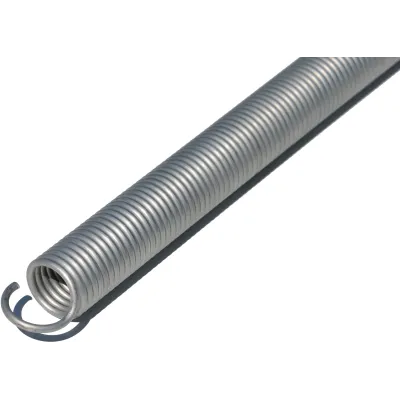
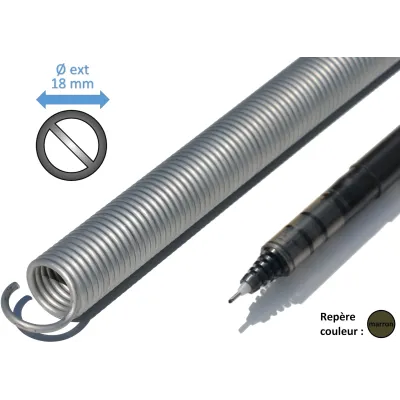
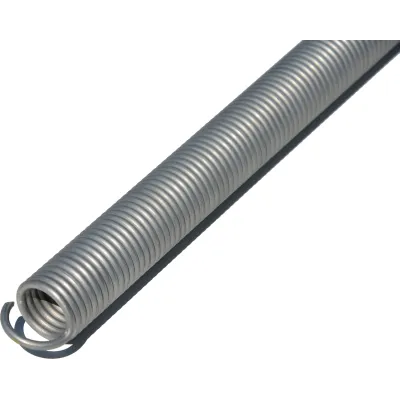
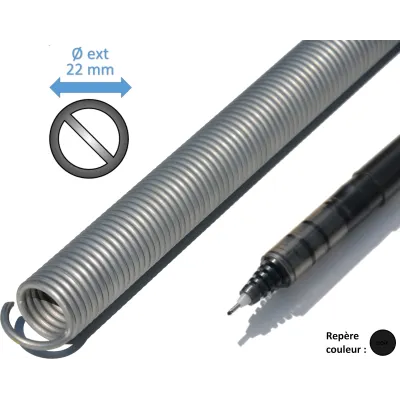
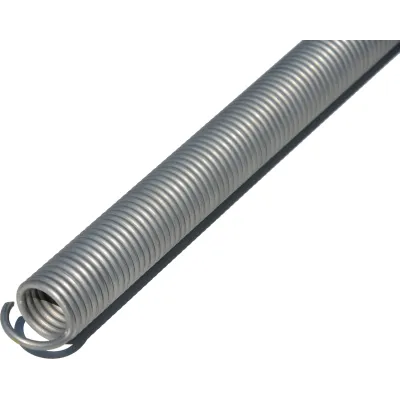
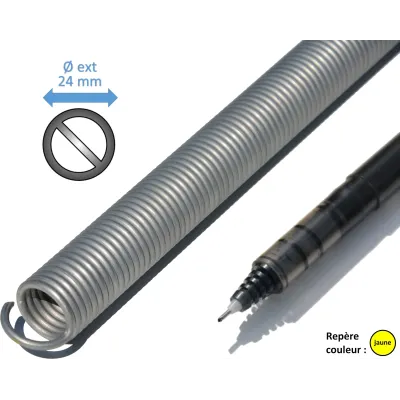
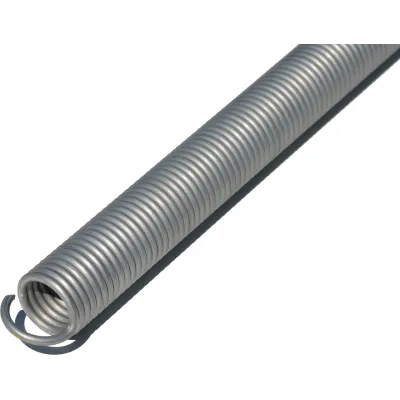
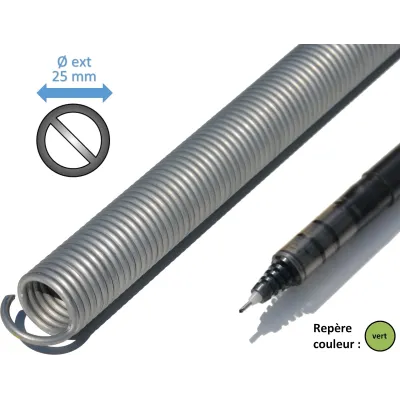
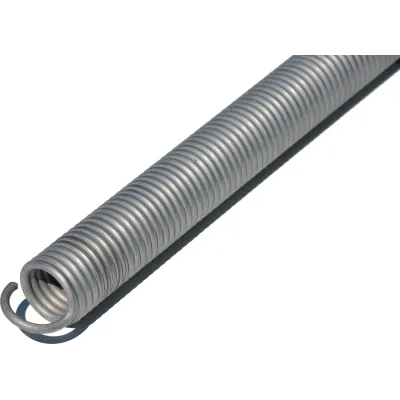
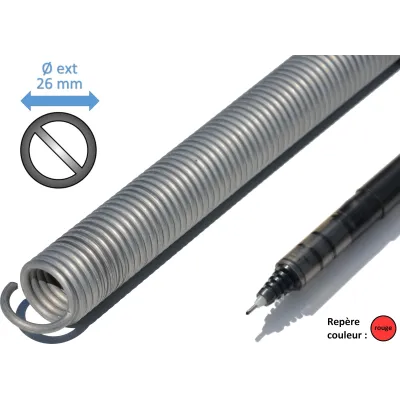
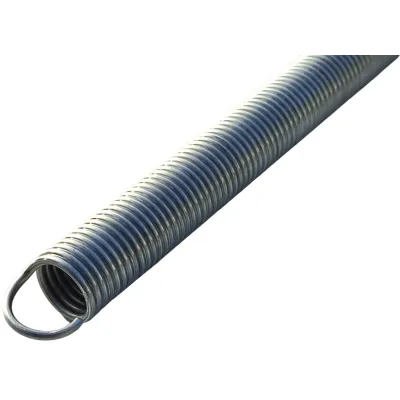
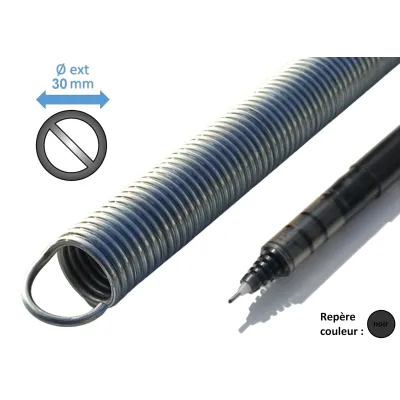
Our sectional garage door springs are all traction springs, which thus extends in operation and deploys the force by retracting. Thus, closed door, your springs are at maximum of their tension / elongation and they will come back up when opening your door, to relieve your engine (or your arms) when lifting the door. Indeed, the panels of a garage door can weigh between 50 and 100 kg on average depending on the size of your door, but the action of the springs will fuck the load to be moved and will make you believe that the apron weighs only 15 to 20kg most of the time. If one of your loose springs is so normal if you weld your sectional door seems much more complicated to open.
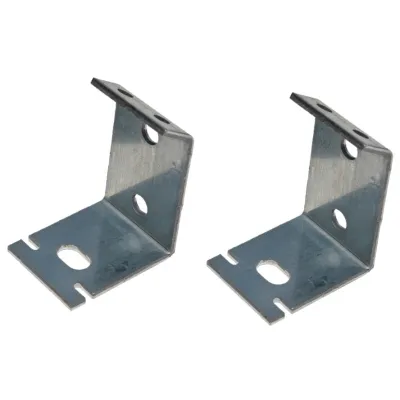
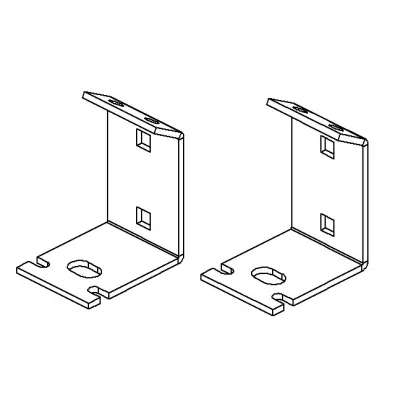
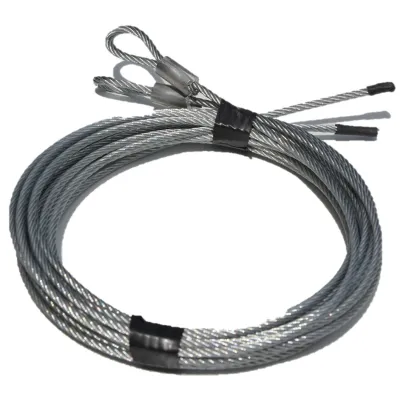
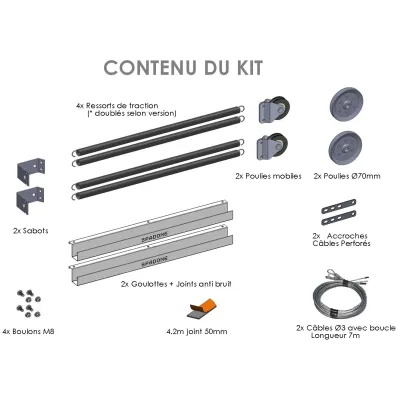
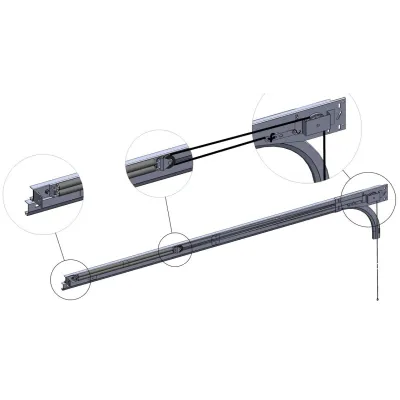
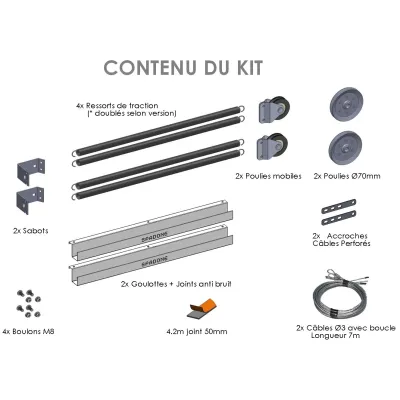
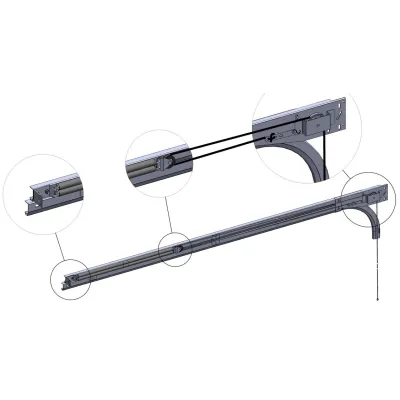
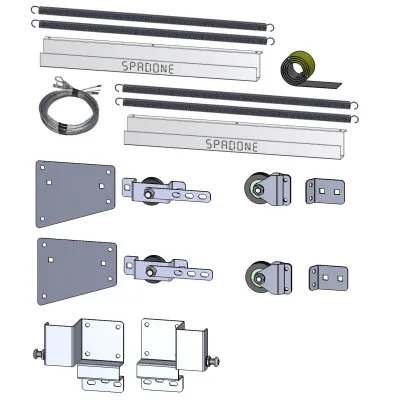
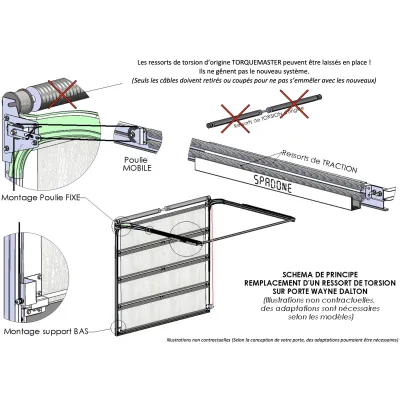
The other type of spring widespread on sectional doors is the twisting spring, which comes to stroll its strength by wrapping itself (hence the appellation of twisting spring). These springs are indispensable for industrial garage doors, but can be replaced by traction springs on housing sectional doors. Being more complicated on those of the traction springs and the number of possible references being very important because of the wide variety of the hanging brackets (on which the cables are wared off), we have developed adaptation kits allowing their replacement by our springs of traction Habitat sectional garage doors (up to 10m2). For the installation of these kits, remove the torsion springs (s) into the original place on your door and install our traction springs along the horizontal rails on your door. The power of the springs will vary depending on the size of your door. We are here advising on the right model to choose from. If you have a Garage door of Wayne Dalton brandThis missing brand with design panels that differs from market standards, we have developed a specific version of the spring replacement kit, which you can also find higher on this page.
Tip for changing your springs: Block your garage door in the open position using a seal on each side, to change your springs safely. In this position, your springs will not be in tension, you can remove them more easily and without risk of injury.
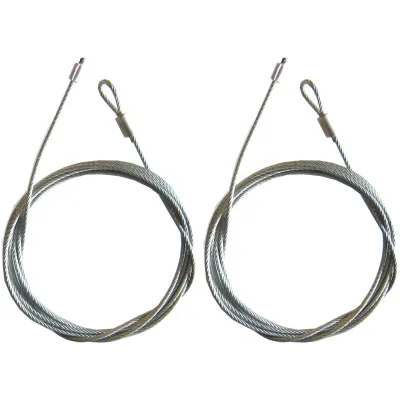
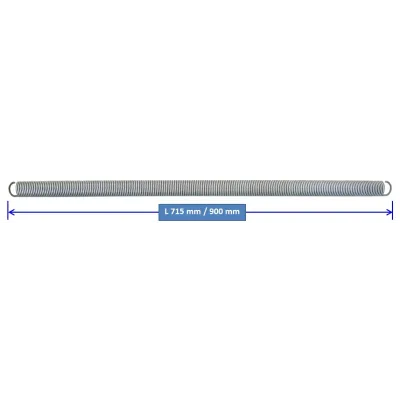
Regarding the size of the springs, we have two lengths: 715mm and 900mm. The first is used for 1900mm doors at 2400mm height. Beyond 2400mm high, we will guide you to the "long" version of 900mm long. The springs voltage will always adjust once the installed or repaired door, playing on the length of the cable that activates them. For info: we recommend not to tend the spring beyond 2.5 times its length at rest to preserve its normal life. Either 180cm in work for the normal version and 225cm for the long version.
Our sectional door springs are designed and manufactured in a particular steel alloy, ensuring them flexibility and rigidity, with an average life of 20,000 cycles, which to provide them with 15 years of operation at the rate of 4 daily openings of your door.
Some garage doors on the market sometimes appear in appearance a single spring. They are then well equipped with a single spring on each side, but probably must date from before the year 2000 or equipped with two springs nested in each other. Indeed, the installation of a single single spring on each side of a garage door was widespread until the beginning of the 2000s, but now the current standard forbids us to propose it, in favor of multi-springs.
To facilitate replacement, we can also use nested springs, our "Type B" spring that can accommodate within "type D", "Type E" and "Type F". These double springs are suitable for doors from 5 to 7m2. Beyond these surfaces, only one double spring per side will probably not suffice, at least in the case of a 40mm isolated sectional door (the most common). This technique makes it possible to replace among others the 7xx springs of the Hörmann doors (as the reference 752 of the AGS models)
For all the reasons mentioned above, the type B, C, D, E and F springs are compatible with the Sectional garage doors of our brand (Spadona) But also other major brands like Novoferm, Soprofen, Hormann, Tubauto, Normstahl, Teckla ...